Protecting Our Coasts, Restoring Mangroves, and Building Resilient Communities
Sierra Leone’s coastal and mangrove ecosystems are vital natural resources that support biodiversity, sustain livelihoods, protect communities, and contribute to climate change mitigation. However, these ecosystems face increasing threats from deforestation, unsustainable resource extraction, coastal erosion, pollution, and the impacts of climate change.
Land for Life Sierra Leone recognises the importance of protecting and restoring these valuable ecosystems through inclusive, community-led, and environmentally sustainable approaches that strengthen coastal resilience and promote long-term benefits for local communities.
WHAT IS BLUE CARBON?
Blue carbon refers to the carbon captured and stored by coastal and marine ecosystems, particularly mangrove forests, tidal marshes, and seagrass meadows. Mangroves are especially important because they store substantial amounts of carbon in their vegetation and underlying soils.
Protecting existing mangrove forests and restoring degraded areas can help reduce greenhouse gas emissions, strengthen biodiversity, and support climate change adaptation.
Mangrove Restoration and Conservation
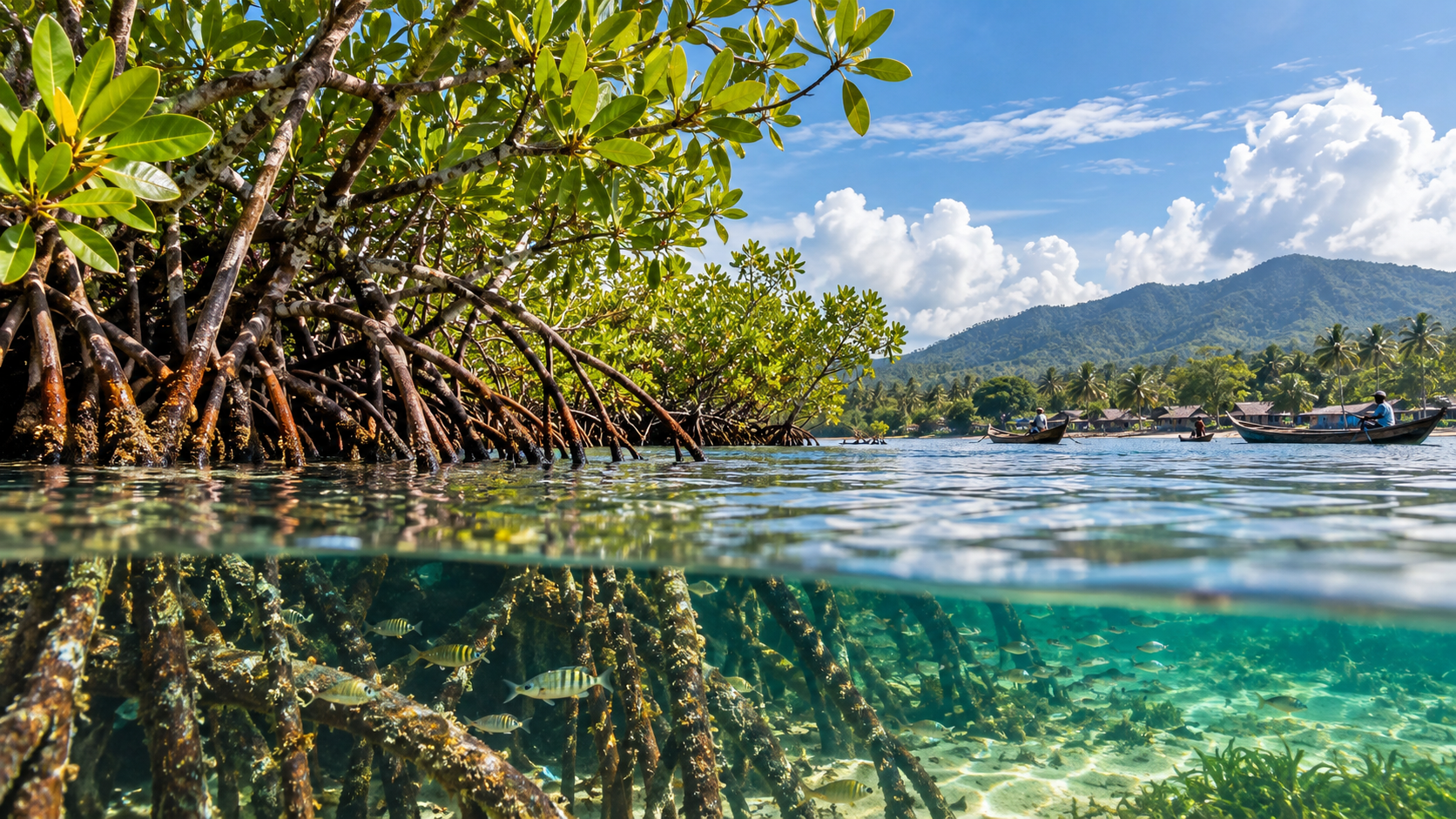
Mangrove forests provide essential environmental and economic benefits. They serve as breeding and nursery grounds for fish and other aquatic species, protect coastlines against erosion and storm surges, and support the livelihoods of fishing and coastal communities.
Land for Life Sierra Leone promotes approaches that encourage community participation in mangrove conservation, responsible natural resource management, restoration of degraded coastal landscapes, and sustainable livelihood opportunities.
Successful restoration requires more than planting trees. It also involves protecting newly restored areas, addressing the causes of degradation, supporting community ownership, and ensuring that local people benefit from conservation efforts.
Carbon Credits and Community Benefits
Blue carbon initiatives can create opportunities for generating carbon credits by protecting existing mangrove ecosystems or restoring degraded coastal habitats, where eligible and supported by credible measurement, reporting, verification, and certification processes.
Carbon finance can potentially provide resources for ecosystem restoration, community development, livelihood diversification, and long-term conservation. However, these opportunities must be pursued transparently and responsibly.
Land for Life Sierra Leone supports approaches that promote community participation, clear land and resource rights, informed consent, equitable benefit-sharing, environmental integrity, and accountability in carbon-related investments. Communities should understand the implications of carbon projects and participate meaningfully in decisions affecting their land, forests, and livelihoods.
Strengthening Coastal Resilience
Coastal resilience refers to the ability of coastal communities and ecosystems to withstand, adapt to, and recover from environmental pressures and climate-related hazards.
Through ecosystem protection, sustainable land governance, community engagement, and partnerships with relevant stakeholders, coastal resilience initiatives can help communities respond to erosion, flooding, changing weather patterns, and the degradation of natural resources.
Land for Life Sierra Leone promotes:
1. Community-led conservation: Supporting local communities to participate in planning, implementing, and monitoring restoration initiatives.
2. Inclusive land governance: Promoting transparent decision-making and recognition of legitimate land and resource rights.
3. Women’s participation: Strengthening the role of women in natural resource governance, conservation, and livelihood development.
4. Sustainable livelihoods: Encouraging environmentally responsible economic opportunities linked to healthy coastal ecosystems.
5. Responsible carbon finance: Promoting transparency, accountability, environmental integrity, and fair community benefit-sharing.
6. Partnerships and learning: Working with communities, civil society organisations, government institutions, researchers, and development partners to strengthen coastal ecosystem management.
Working Together for Sustainable Coastal Ecosystems
Protecting Sierra Leone’s mangroves and coastal ecosystems requires collective action. Land for Life Sierra Leone seeks to contribute to partnerships and initiatives that restore degraded landscapes, strengthen community rights, improve natural resource governance, and ensure that conservation and climate investments deliver lasting environmental and social benefits.