Land for Life Engages in the Validation of Sierra Leone’s National Carbon Strategy

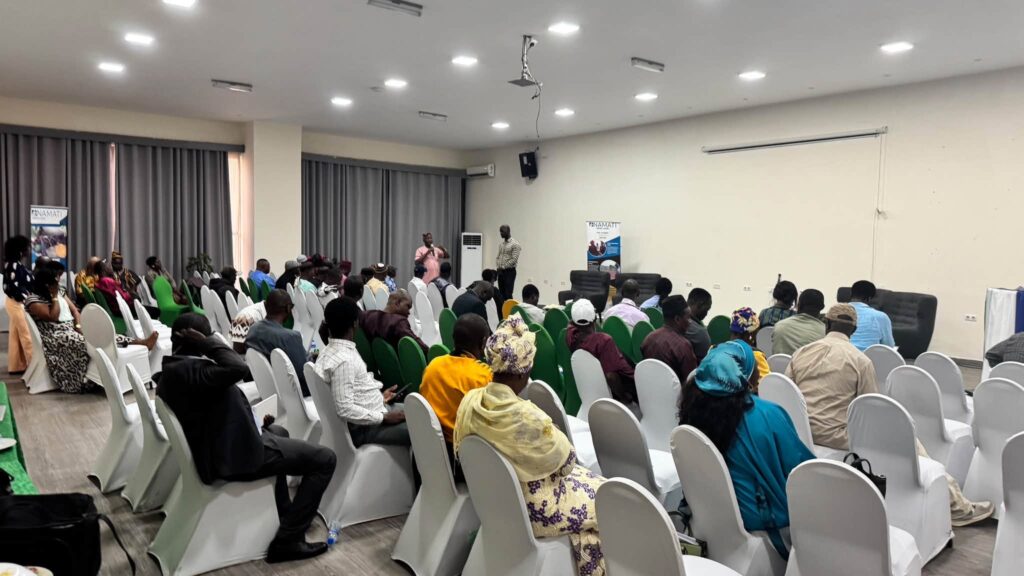
Land for Life continues to contribute to national discussions on carbon trading in Sierra Leone, advocating for transparent, accountable, and environmentally sustainable carbon investments that protect community land rights and deliver meaningful benefits to local communities.
Recently, the organisation participated in the review and validation of Sierra Leone’s National Carbon Strategy, alongside the Ministry of Environment and Climate Change, NAMATI, and other key stakeholders. The engagement brought together representatives of traditional authorities, local councils, landowners, land users, the private sector, and civil society organisations to discuss the framework for responsible carbon investments and the importance of ensuring that communities are central to decisions affecting their land and natural resources.
Why Carbon Trading Matters for Sierra Leone
Carbon trading presents an opportunity for Sierra Leone to advance climate action, promote environmental conservation, and create new sources of income for communities and the national economy. Through initiatives such as forest conservation, mangrove restoration, reforestation, and sustainable land management, carbon projects can contribute to reducing greenhouse gas emissions while protecting ecosystems that support local livelihoods.
The initiative is particularly relevant to Sierra Leone, where forests, mangroves, wetlands, and other natural ecosystems play important roles in climate regulation, biodiversity conservation, coastal protection, and food security. When properly designed and implemented, carbon projects can help address deforestation, environmental degradation, and the loss of critical habitats while creating opportunities for communities to benefit from the sustainable management of their natural resources.
Carbon investments can also support alternative livelihood opportunities, strengthen community-led conservation, and potentially generate funding for local development priorities, including agriculture, water access, education, and community infrastructure. However, these benefits depend on transparent agreements, credible carbon accounting, fair benefit-sharing arrangements, and effective monitoring to ensure that promised outcomes are achieved.
Protecting Community Land Rights and Promoting Accountability
Despite these opportunities, carbon trading can present significant risks if communities do not fully understand the nature of the investments, the value of their natural resources, or the terms of agreements they enter into. Unclear land and carbon rights, inadequate consultation, unequal benefit-sharing, and limited access to information can expose communities to exploitation and undermine their livelihoods.
For Sierra Leone, the implementation of carbon projects must therefore be informed by the country’s land governance framework, including the Customary Land Rights Act, 2022, and the National Land Commission Act, 2022. These laws provide important safeguards and institutional frameworks relevant to land rights, land administration, and community participation. Their application, alongside appropriate environmental and carbon-market safeguards, is essential to ensuring that carbon investments respect the rights of landowners and land users, including women and other groups who may face barriers to decision-making.
Land for Life recognises that community awareness and participation are fundamental to responsible carbon trading. Communities need access to clear and accessible information about carbon credits, project developers, contractual obligations, the duration of agreements, potential risks, and the mechanisms through which revenues and other benefits will be shared. They must also be able to participate meaningfully in negotiations, provide informed consent where required, and seek redress when their rights are threatened.
Strengthening Community Capacity and Civil Society Engagement
During the review and validation of the National Carbon Strategy, participants emphasised the need to strengthen the capacity of communities and advocacy groups to understand carbon credit investments and their implications. This is important because informed communities are better positioned to assess proposed projects, engage with investors, negotiate fair agreements, and hold relevant institutions and project developers accountable.
Land for Life’s participation builds on its broader work to strengthen land governance, promote community rights, and facilitate dialogue among communities, civil society organisations, traditional authorities, government institutions, and private-sector actors. The organisation’s engagement in carbon-trading discussions provides an opportunity to connect emerging carbon-market initiatives with established priorities around responsible land management, environmental protection, and inclusive development.
By supporting awareness-raising, policy dialogue, and stronger accountability mechanisms, Land for Life seeks to contribute to a carbon market in which communities are recognised not merely as custodians of natural resources, but as rights-holders and active participants in decisions about how those resources are managed and valued.
Towards Inclusive and Sustainable Carbon Investments
The validation of Sierra Leone’s National Carbon Strategy represents an important step towards establishing a clearer national framework for carbon investments. Its effectiveness will depend on how the strategy is translated into practice, including the development of transparent procedures, credible environmental safeguards, effective institutional oversight, and fair benefit-sharing arrangements.
For Land for Life, the central priority is to ensure that carbon trading contributes to environmental sustainability without compromising community land rights, food security, and local livelihoods. Carbon initiatives should deliver measurable environmental benefits while creating fair and lasting value for the communities whose lands and natural resources make these investments possible.
Land for Life remains committed to promoting inclusive, transparent, and responsible carbon trading in Sierra Leone, ensuring that climate action and environmental conservation go hand in hand with the protection of community rights, public accountability, and sustainable local development