
From Conflict to Collective Farming: How Community Action Group Revived Hope in Lagor, Pujehun District

For years, the fertile soil in and around Lagor Community, Bari Poturu, Pujehun District, lay untended with the recurrence of conflict after conflict. “Land disputes were common here,” recalls a local elder. “Families would fight over boundaries and ownership of land. The land became abandoned. We couldn’t farm it, and it left us all hungry.” A similar story was echoed in Mammorika Community in Tonkolili District, Waima Tonkondo, in Kenema District, where unresolved land conflicts between communities and individuals left valuable agricultural land fallow and food insecurity rampant.
The pattern was always the same in all the operational districts of Land for Life. After a dispute was settled, community chiefs and stakeholders would insist that “Getting our land back is not enough; we need to get it engaged and productive so that we will be able to feed ourselves and stop fighting over it.” It was clear thatwithout a platform for collective action, this vision remained a dream. Farming was an individual pursuit, and the spirit of communal service had faded, replaced by a dependency on donor-funded projects that provided temporary relief but no lasting solution.
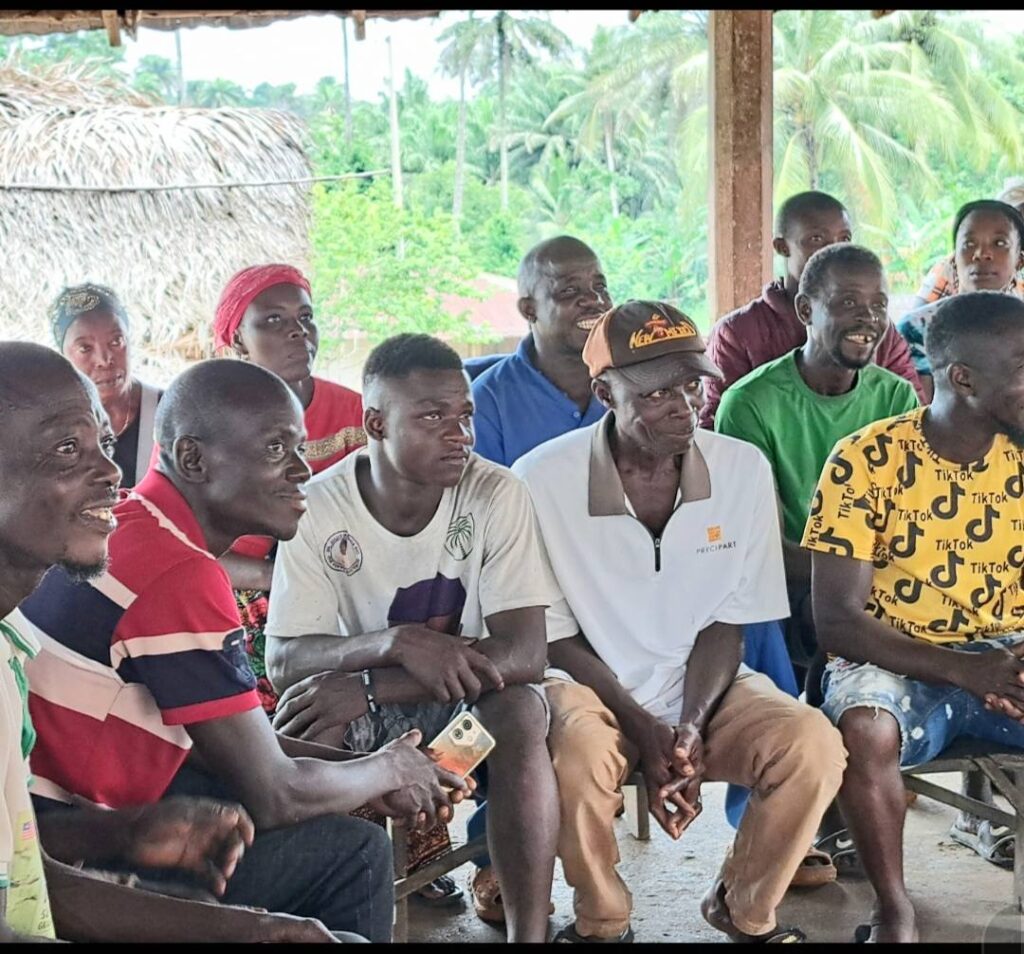
The breakthrough came in mid-2024 when Land for Life, a civil society organisation working in Pujehun district through its partner organisation, Partner for the Transformation of Conflict (PICOT), approached the Lagor community with a bold idea of bringing it together through communal farming. Having witnessed the community’s courage in either refusing to give their land to investors or planning to develop it themselves, Land for Life proposed forming a Community Action Group (CAG).
The Town Chief and community stakeholders embraced the concept. They provided 10 hectares of land for the Community Action Group activity. An inclusive plan was developed, where women and persons with disabilities were included to ensure true ownership and break the cycle of donor dependency.
The Town Chief and community stakeholders embraced the concept. They provided 10 hectares of land for the Community Action Group activity. An inclusive plan was developed, where women and persons with disabilities were included to ensure true ownership and break the cycle of donor dependency. With a shared purpose, the newly formed Lagor CAG sprang into action. They cleared the overgrown land, got its surveyed by a surveyor from the Ministry of Land in Pujehun District and held meetings to decide which crops to plant, and mapped out the support they needed. When the rains arrived in May this year, the community worked as one, planting rice, cassava, and groundnuts
They weeded, tended, and protected the crops using traditional methods, watching with growing pride as their shared effort turned into a flourishing field. The collective work rebuilt more than just the soil; it rebuilt trust. “We thought at first we couldn’t do it collectively,” one member admitted, “but now we think we can even do more.”
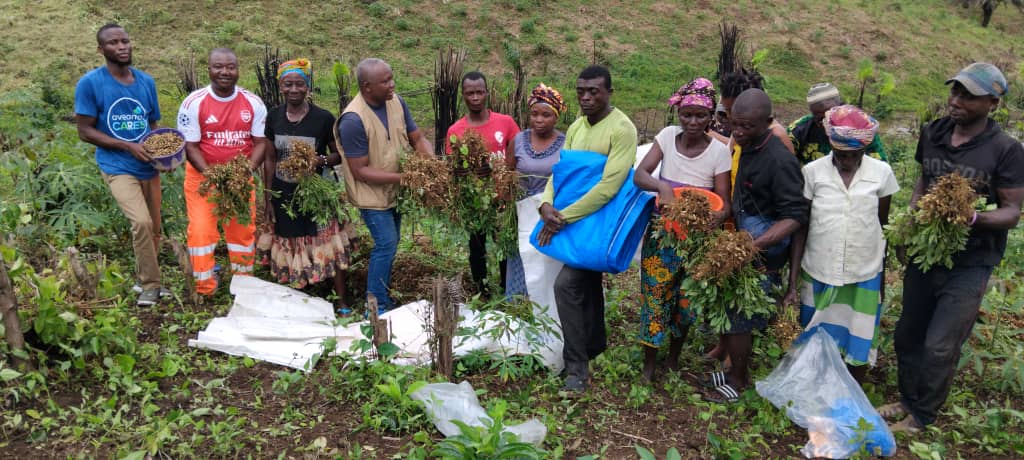
The proof of their hard work and success came on Saturday, 16th August 2025, when the community celebrated the first harvest of groundnuts. The fields were alive with more than just crops; they were filled with joy, music, and dance. Traditional songs and performances cheered on the CAG members, turning the day into a celebration not just of food, but of unity, self-reliance, and peace. Already, the harvest has shown promise; 20% of the groundnuts alone have produced over four bags, valued at thousands of Leones. This income will help the community tackle social and communal needs while also preparing for the next farming season.
They weeded, tended, and protected the crops using traditional methods, watching with growing pride as their shared effort turned into a flourishing field. The collective work rebuilt more than just the soil; it rebuilt trust. “We thought at first we couldn’t do it collectively,” one member admitted, “but now we think we can even do more.”
The proof of their hard work and success came on Saturday, 16th August 2025, when the community celebrated the first harvest of groundnuts. The fields were alive with more than just crops; they were filled with joy, music, and dance. Traditional songs and performances cheered on the CAG members, turning the day into a celebration not just of food, but of unity, self-reliance, and peace. Already, the harvest has shown promise; 20% of the groundnuts alone have produced over four bags, valued at thousands of Leones. This income will help the community tackle social and communal needs while also preparing for the next farming season.