Land for Life and Welthungerhilfe Conclude Five-Day Joint Monitoring Mission Across Four Districts

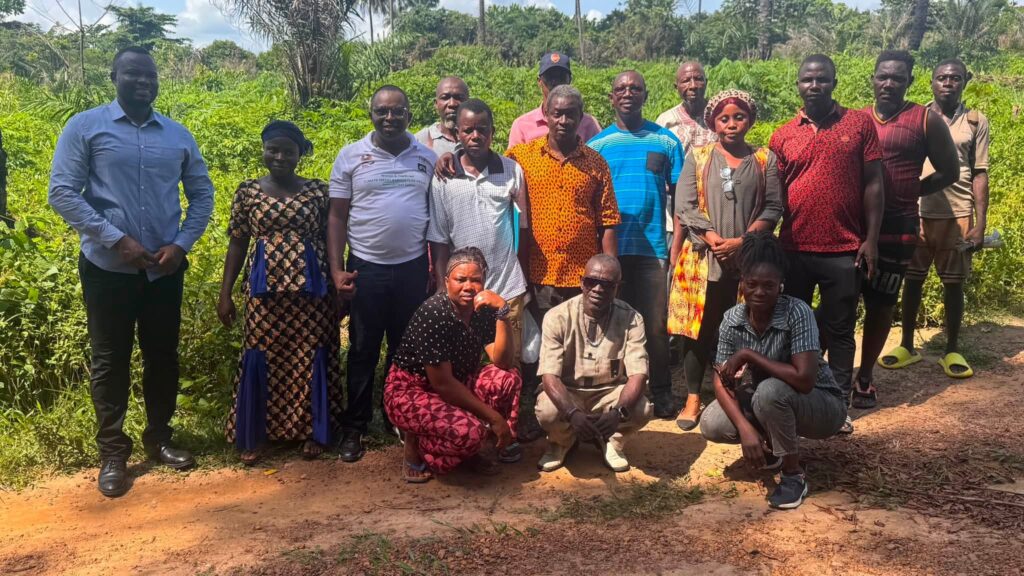
Land for Life Sierra Leone, in collaboration with Welthungerhilfe (WHH), has successfully concluded a five-day joint monitoring mission across the project’s four implementation districts of Port Loko, Tonkolili, Pujehun, and Kenema. The exercise assessed the progress of ongoing interventions, documented the impact of the project on communities, and identified opportunities to strengthen future implementation.
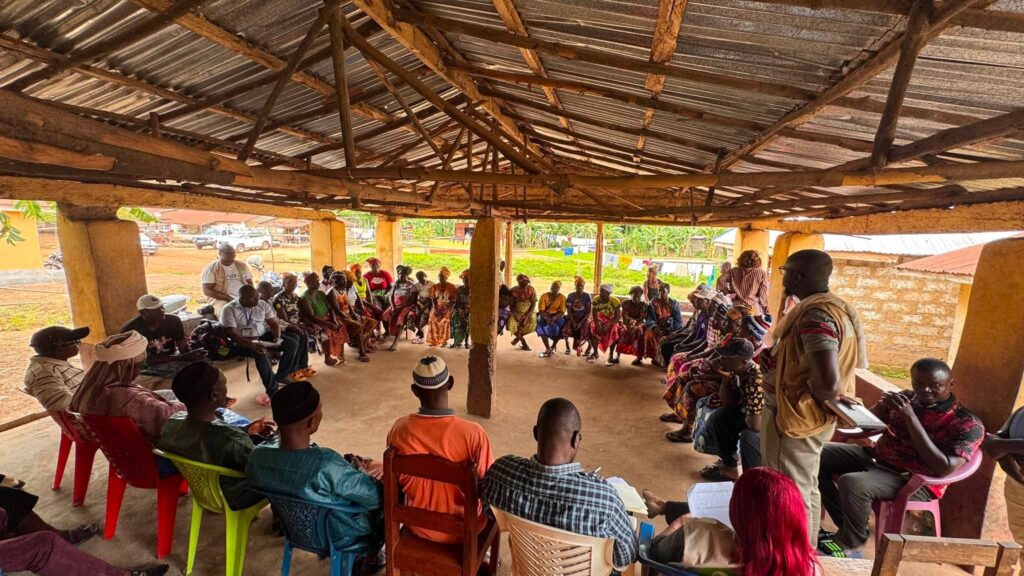
Throughout the monitoring mission, the team engaged with members of the District Multi-Stakeholder Platforms (DMSPs), traditional authorities, community representatives, and beneficiaries whose land rights have been restored through the project’s advocacy, awareness-raising, and community sensitization on land governance. These discussions provided valuable insights into how the project is improving access to land, strengthening local conflict resolution mechanisms, and promoting inclusive participation in land governance.
One of the most inspiring stories emerged from Sembehun Malegohun Chiefdom in Kenema District, where community members shared how the project’s conflict resolution and land governance education had helped transform longstanding disputes into collaboration. Following a series of land conflicts, community members established a group called “Muyengia,“ meaning “We Have Stood Up.” The group brings together 48 members, including traditional leaders and community representatives, who now work collectively on agricultural activities. Their initiative reflects stronger community cohesion, improved relationships, and a renewed commitment to peaceful and productive land use.
In Port Loko District, Isatu Kamara recounted how support from Land for Life enabled her to reclaim a portion of her late father’s land. She now cultivates the land to produce food and generate income, allowing her to better provide for her children. Her story highlights the project’s contribution to protecting women’s land rights and improving household livelihoods.
In Pujehun District, Amie Sowa expressed her appreciation to the District Multi-Stakeholder Platform for facilitating a direct lease agreement between her and the company operating in her community. The DMSP also successfully intervened to ensure that her outstanding lease rent was paid, allowing her to receive the benefits to which she was entitled. Her experience demonstrates the important role that the DMSPs continue to play in promoting accountability and protecting community rights.
Meanwhile, in Tonkolili District, the monitoring team observed the continued growth of the District Multi-Stakeholder Platform through the inclusion of a broader range of stakeholders, particularly women and other marginalized groups. This inclusive approach is strengthening local participation in decision-making and ensuring that diverse voices contribute to land governance processes.
The monitoring mission concluded in Bo City, where representatives from Land for Life and Welthungerhilfe held a debriefing session to reflect on observations from the field. The meeting reviewed the project’s achievements, discussed implementation challenges, documented lessons learned, and agreed on practical recommendations to further strengthen future interventions.
The joint monitoring exercise reaffirmed the positive impact of the Land for Life project in empowering communities, strengthening local land governance structures, promoting peaceful conflict resolution, and advancing equitable access to land across Sierra Leone. As implementation continues, Land for Life and Welthungerhilfe remain committed to working alongside communities and local stakeholders to build inclusive, transparent, and sustainable land governance systems that improve livelihoods and protect land rights for all.