
Beyond the Kitchen: Sampa Kamara’s Path to Land Governance Advocacy for Women in Her Community

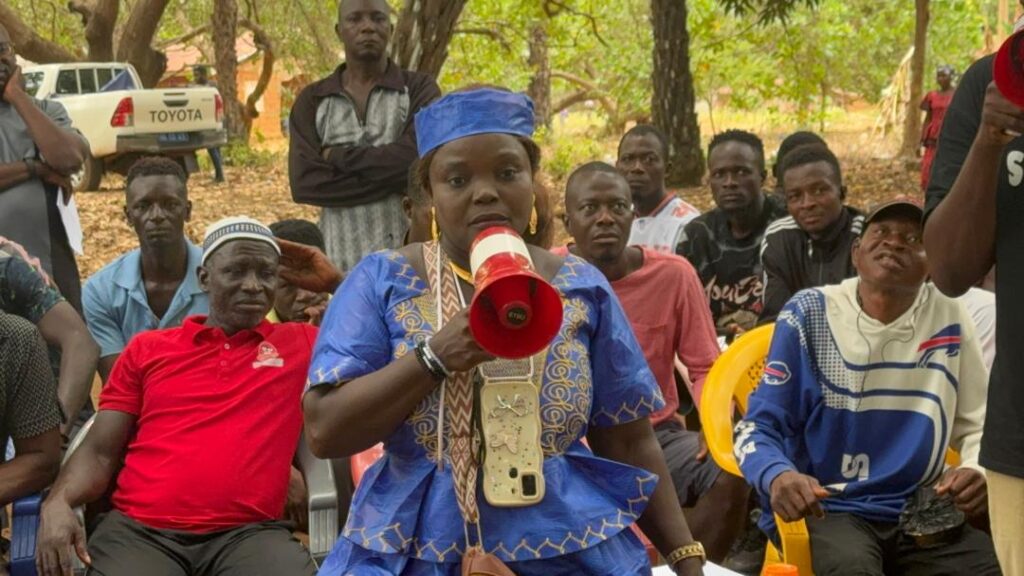
For most of her life, Sampa Kamara’s place in the family was firmly behind the kitchen walls. In her paternal home in Romani Chiefdom, she spent countless hours preparing meals for men and other family members, carrying the heavy responsibilities expected of women, yet having little opportunity to speak, contribute, or be heard in decisions that directly affected her life.
She was never invited to family discussions on land matters. Negotiations over family land—an important source of livelihood and security—were considered the domain of men. Samoa often reflected on how much of her life had been spent over a fire in the kitchen, once joking that even her dark complexion was a mark of the many years she had spent cooking and serving others while remaining invisible in family decision-making.
Her silence, however, did not mean she had no rights.
After marrying, Samoa found herself struggling to provide for her children. The land available in her husband’s home was limited and had to be shared among several co-wives, leaving little space for her to cultivate enough food or generate income. At the same time, when she sought access to land from her paternal family, her uncle denied her claim, despite her rightful connection to the family land.
A turning point came when Land for Life began working in her community. Through community engagements, awareness sessions, and advocacy training on land rights and women’s participation, Samoa gained something she had long been denied: knowledge of her rights and the confidence to speak for herself.
Armed with this awareness, she took her case to the Village Area Land Committee, where community leaders and traditional authorities listened to her concerns and engaged her uncle in dialogue. Through mediation and advocacy, justice prevailed.
Her uncle eventually allocated Samoa a substantial portion of land in her paternal home.
Today, that land is more than property, it is dignity, independence, and hope. Samoa now uses her land to grow vegetables and other crops, improving food security for her household and generating support for her children’s wellbeing. More importantly, she has moved from being a silent worker in the kitchen to becoming a woman who understands her rights, speaks with confidence, and participates in decisions that shape her future.