Inclusive Land Governance as a Pathway to Food Security and Environmental Protection

Inclusive land governance goes beyond mere participation. It requires deliberate collaboration, transparency, and accountability across all actors within the land governance sector. Land remains one of Sierra Leone’s most valuable resources, and its importance cannot be overstated. Where land-related conflicts persist, food systems struggle to thrive, environmental challenges become more difficult to address, and the degradation of forests and coastal ecosystems is often accelerated.
As a trusted land governance actor in Sierra Leone, Land for Life focuses on empowering communities to understand, protect, and claim their land rights. Awareness is the critical first step. When communities are informed of their rights and responsibilities over land, they are better positioned to make strategic decisions about its use. Our work supports communities to harness land as a tool for addressing pressing challenges such as food insecurity, sustainable livelihoods, and environmental protection.
A central pillar of this approach, as provided for under the Customary Land Rights Act, is the establishment of Village and Chiefdom Land Committees. These committees play a vital role at the local level. Beyond their mandate to prevent and resolve land-related disputes, they support communities to manage land productively, equitably, and sustainably. Through these structures, land is transformed from a potential source of conflict into a driver of food security, environmental stewardship, and inclusive local development.
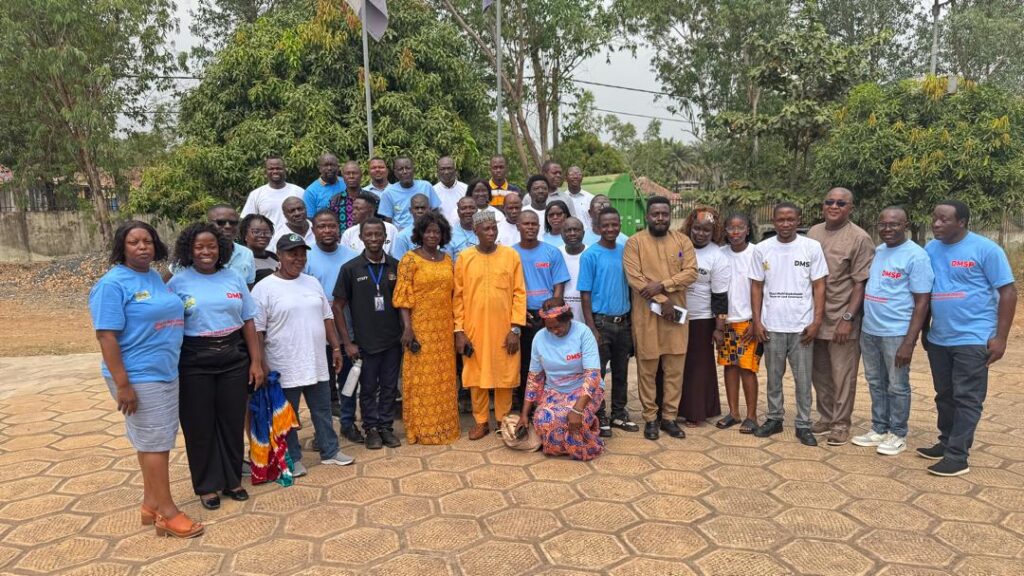
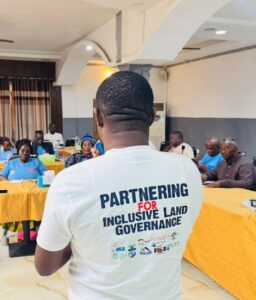
In line with this mandate, Land for Life, in collaboration with the National Land Commission, conducted a Training of Trainers (ToT) for members of the District Multi-Stakeholder Platforms (DMSPs) on the verification and formation of Village and Chiefdom Land Committees. The training took place on 3 and 5 February 2026 and brought together participants from districts across the country.
The training equipped participants with practical tools and knowledge to support the effective verification of existing land committees and the establishment of new ones where they do not yet exist. It also reinforced key legal frameworks guiding land governance in Sierra Leone, ensuring that decentralised land administration aligns with national laws and principles of inclusivity, gender equality, and accountability.
Through these efforts, Land for Life continues to support the strengthening of decentralised land governance structures, ensuring that land serves as a foundation for peace, sustainable development, and resilient communities across Sierra Leone