
Land Governance Under Pressure: Vested Interests and Disputes

Land is mostly characterised by highly multi-vested interests. Sometimes, powerful actors are involved. When this is the case, dialogue becomes the only sustainable and safe way to reaching a compromise
.
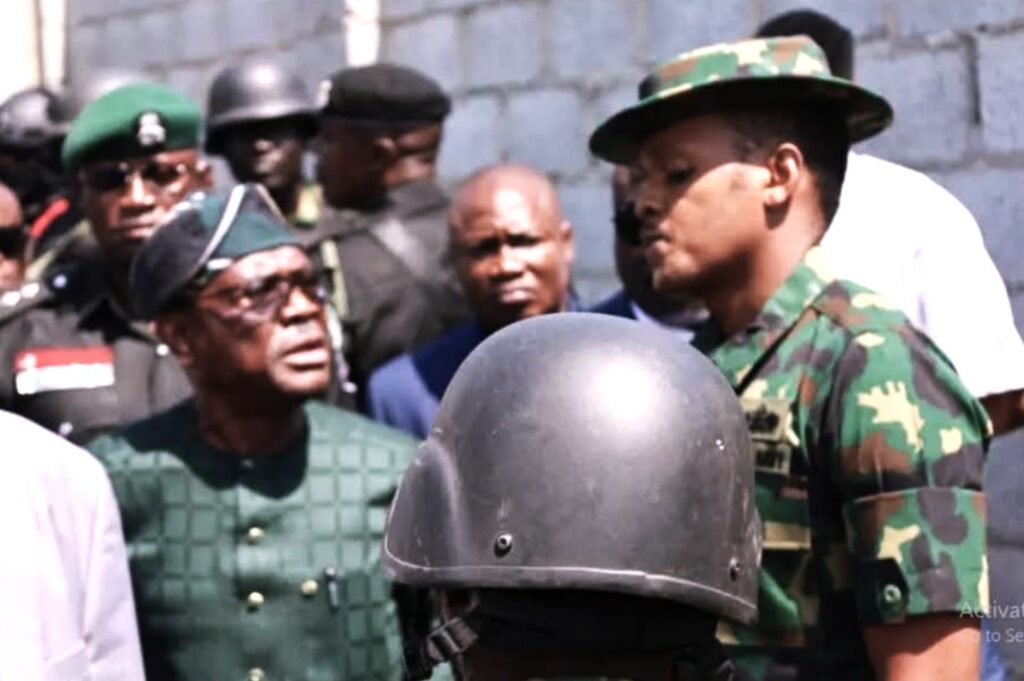
As reported by Channels Television https://www.youtube.com/watch?v=E3zaOFcWgC4, the minister’s key function is to protect all State lands and prevent unauthorised occupation.
While it is reported that Minister Wike and his team were on duty to check the veracity of the rights of claim of all developers, the military officer and his team said they were acting on orders to protect that particular land that the minister and his team wanted to verify.
Whatever the real situation is, a few utterances are of our interest.
The Honourable Minister can be heard saying, ‘You will have to kill everybody here, but you won’t be allowed to develop this land’.
In other versions of footage recorded of the same saga, the minister can be heard shouting at the military officer to shut up and calling him ‘a fool’. The military officer respectfully replied: ‘I won’t shut up and I am not a fool’.
In all of the altercations, the message we have to send is that land conflicts are of varying kinds and of different natures. Sometimes, even the powerful actors can feel disempowered and marginalised. Minister Wike felt that way, and he said: ‘How can we continue to allow lawlessness to prevail in this country…. what about other citizens who don’t have powers to deploy military guards to protect their lands. It has come to a point that government officials who are on duty to do their rightful jobs are intimidated. I will not accept that’.
To contextualise this situation, a recent research with FAO discovered that ‘Tenure Security is not always determined by formal documentation’ – This is also in our laws now. It says that non-documentation does not deny the right of ownership.
In application, we know that in most rural communities, people don’t need to produce a documentation to prove that they own their lands. Unfortunately, this is not the case for the urban areas and thus the reason for many contests over land, which necessitates forgery and fraud – People are in rush to prove their ownership through documents. Truth does not matter in most cases.
Therefore, the question now is, should documentation be the best way to prove ownership or should the court try to seek the truth beyond a reasonable doubts.?